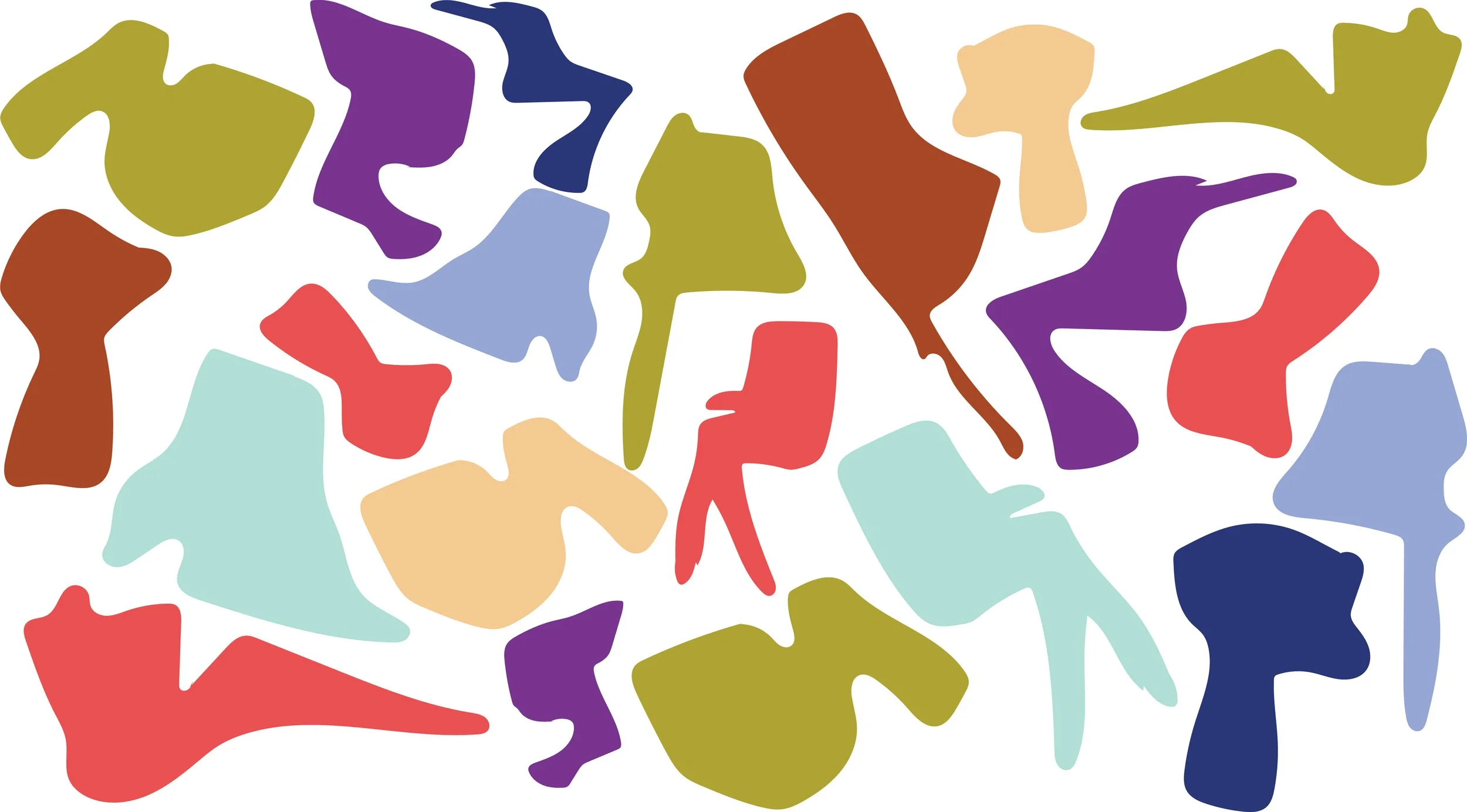
Thims
Gender and sexuality intersect in a variety of ways that impact our relationship with the built environment. Culturally we create rules that impose strict restrictions on how to appropriately hold ourselves and interact with others. These rules can be seen in how we interact with many objects, but in my experience the object that holds the most gendered connotations is the chair.
Since its popularization several centuries ago, the chair itself has always been a signifier for societal status and power. How people interact with this object has always been symbolic of the position the user holds. Rules and etiquette were created in order to distinguish between classes, race, and gender in order to uphold a very strict social order. I believe that the act of sitting itself is a performance that has historically been divided between men and women. Men are expected to sit with a posture that denotes power while women are expected to sit in a position that communicates purity and chastity. However not everybody plays into their roles, historically Queer people have always subverted the rules of etiquette due to our otherness within accepted society.
I've been inspired by asking myself how I could take the archetype of the chair and conform it to my ideas around gender and sexuality. By injecting fluidity and fun into an object that has been used to restrict and constrain, I aim to evolve the idea of what appropriate seating can look like.
Step 1: Research
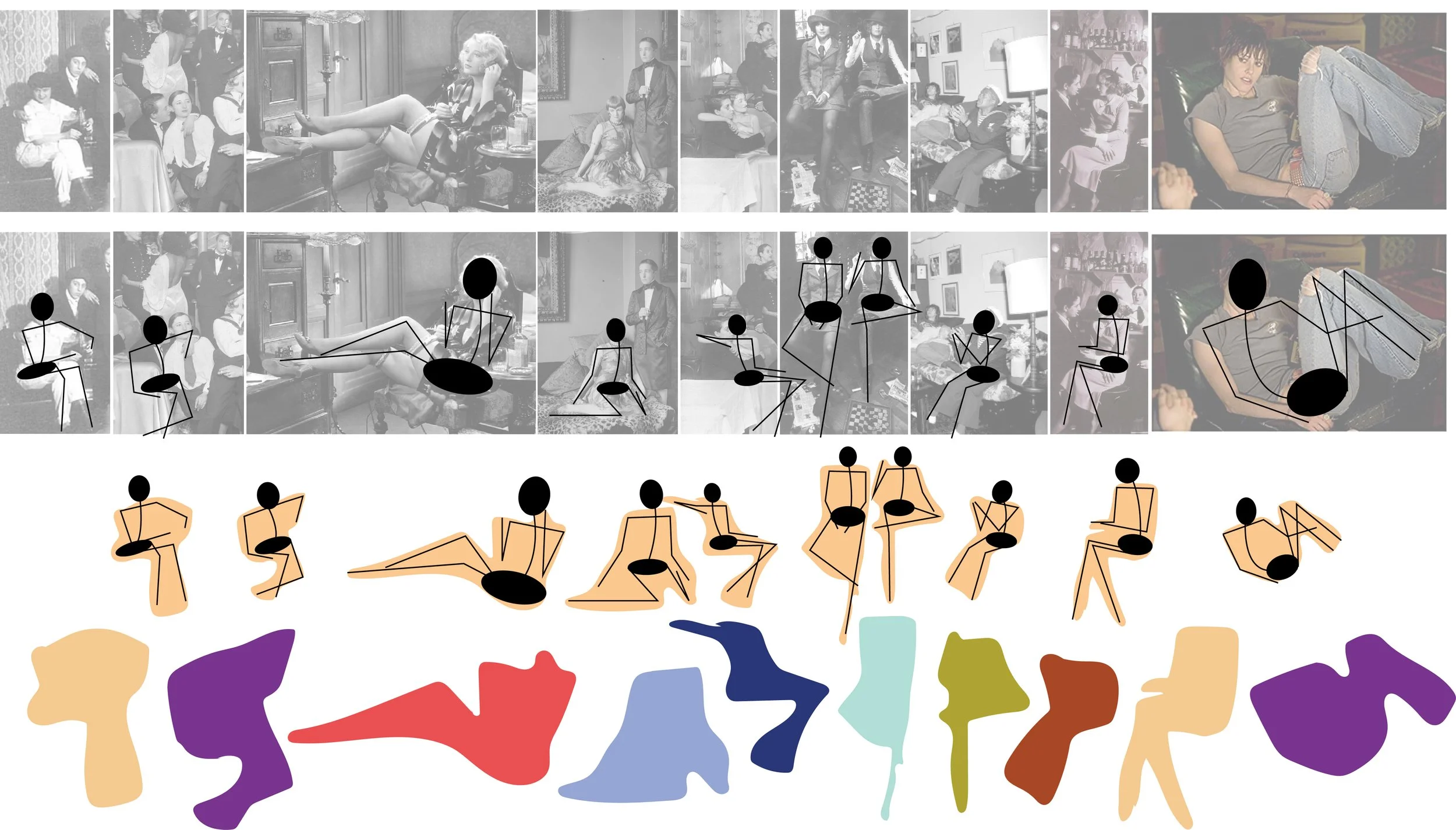
Often times memes and stereotypes reveal deeper truths. Always hilarious, sometimes true, the meme about gay people sitting incorrectly has always struck a nerve, but where does it come from? And why does it feel so true? In the quest to elevate these stereotypes I began by collecting images from queer spaces and media, and then processing their postures into simplified forms.
Step 2: Ideation
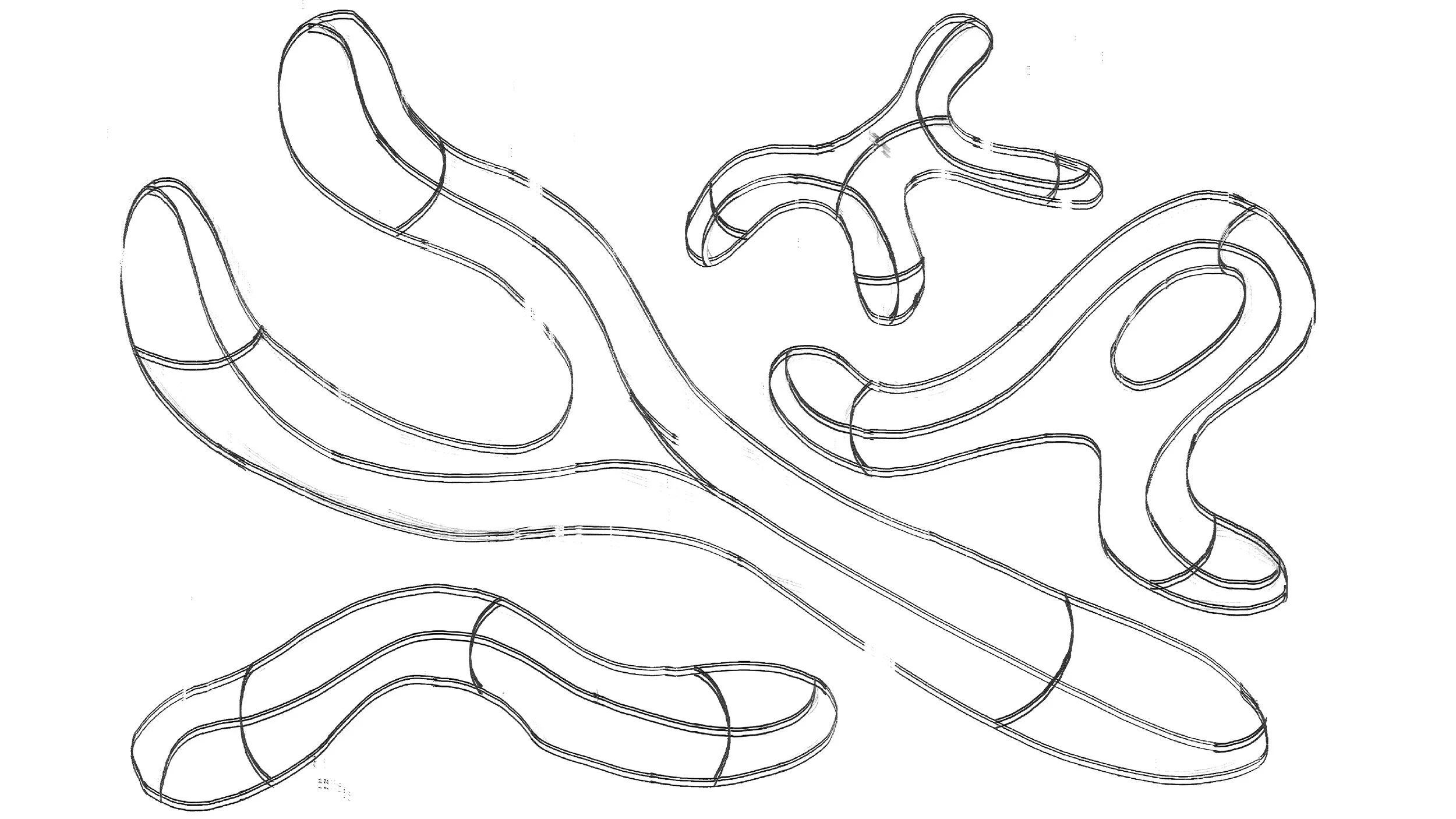
After processing the images into shapes they then needed to be translated into three dimensional forms.
Step 3: Construction
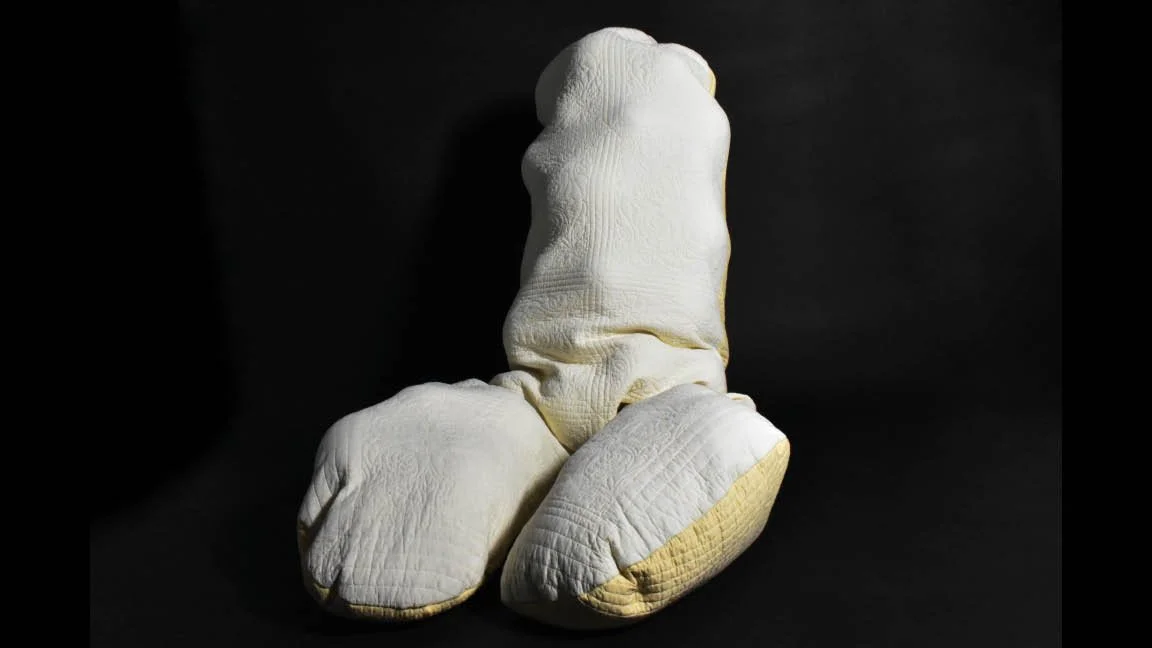
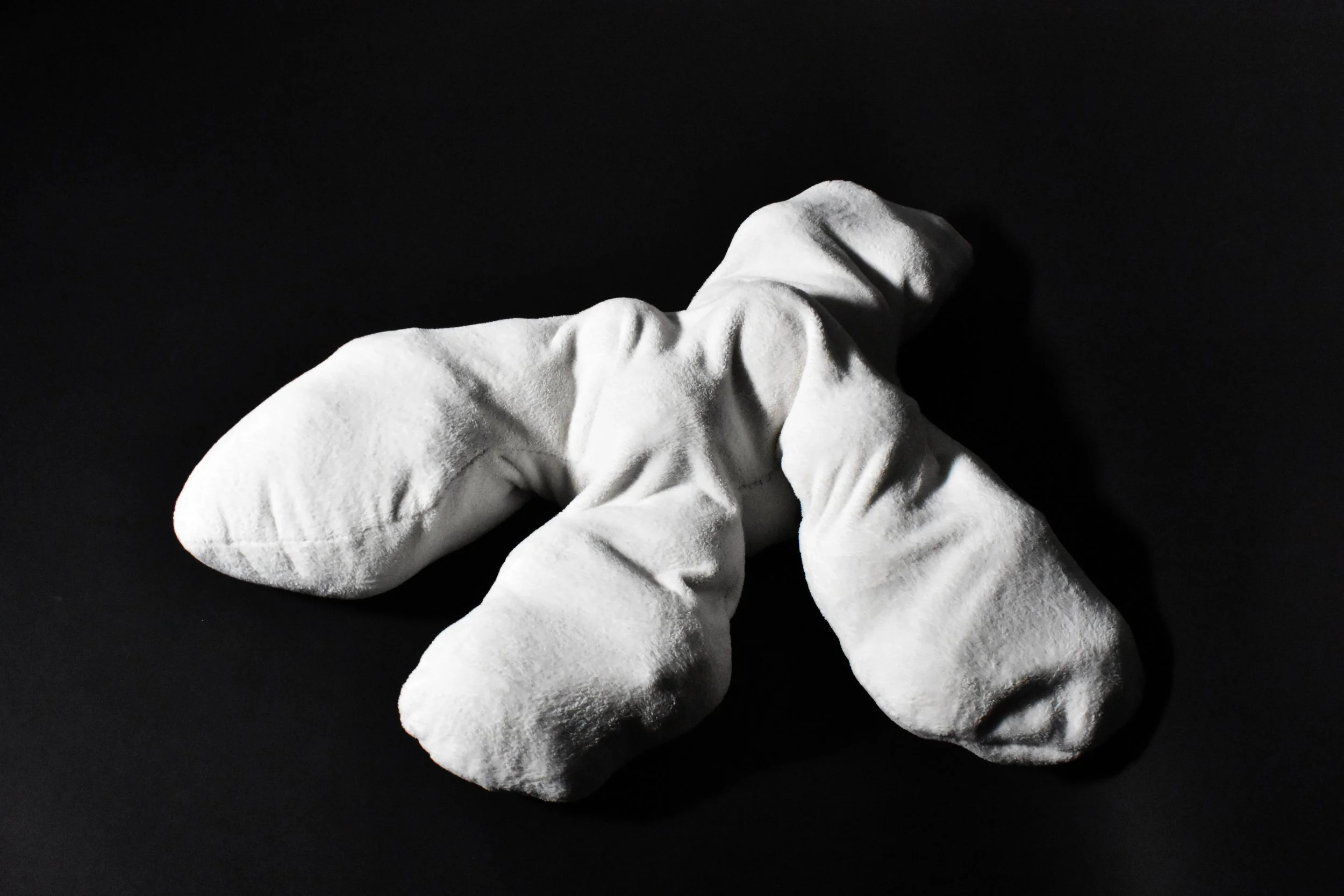
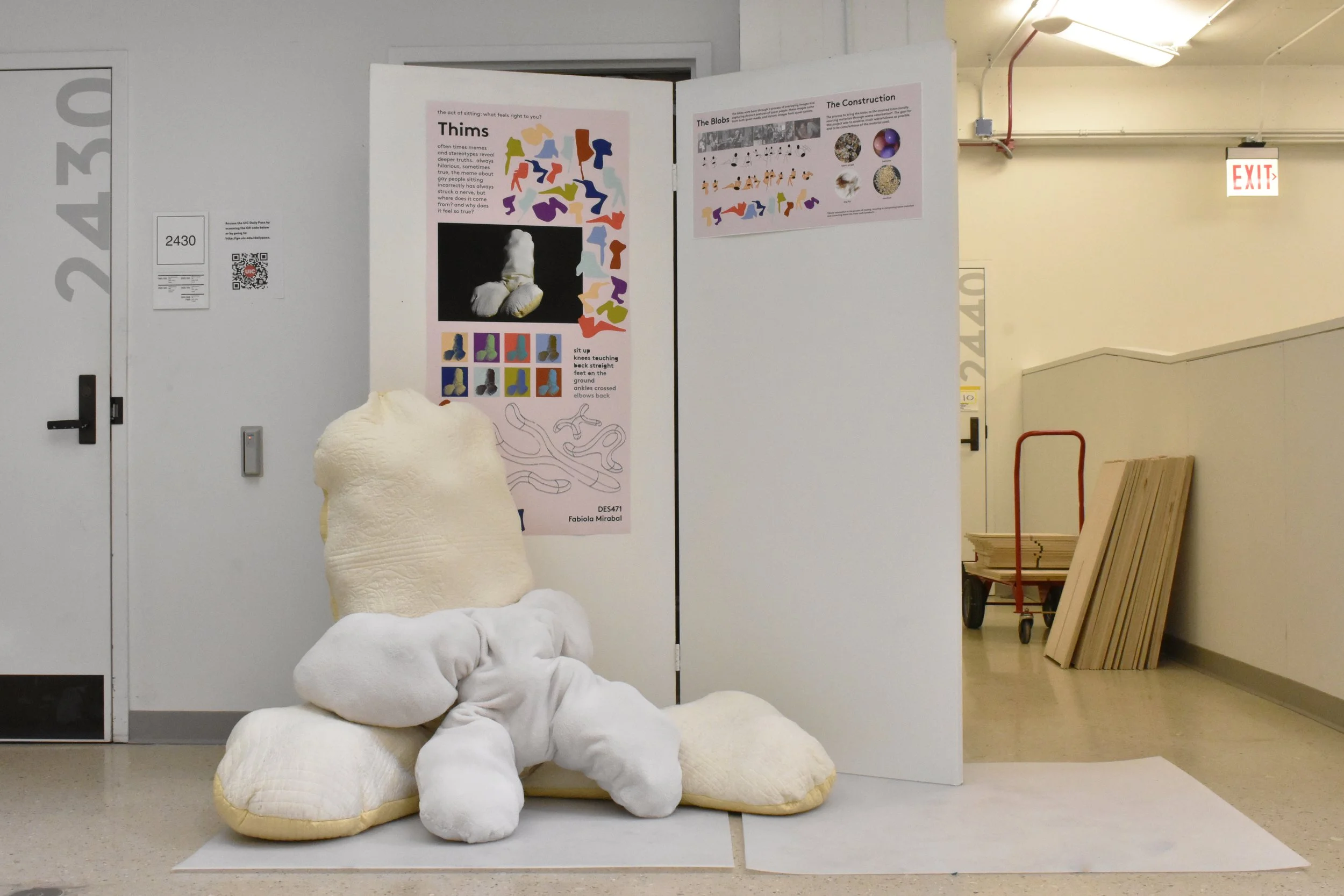
The sketches were then brought to life. An important element to bring into the process was waste valorization. That led me to look into alternative materials sources for the seating elements. The casing of the blobs was made from thrifted fabrics. Then fabric scraps, recycled balloons, and dog hair were collected for the filling.
Step 4: Exhibition
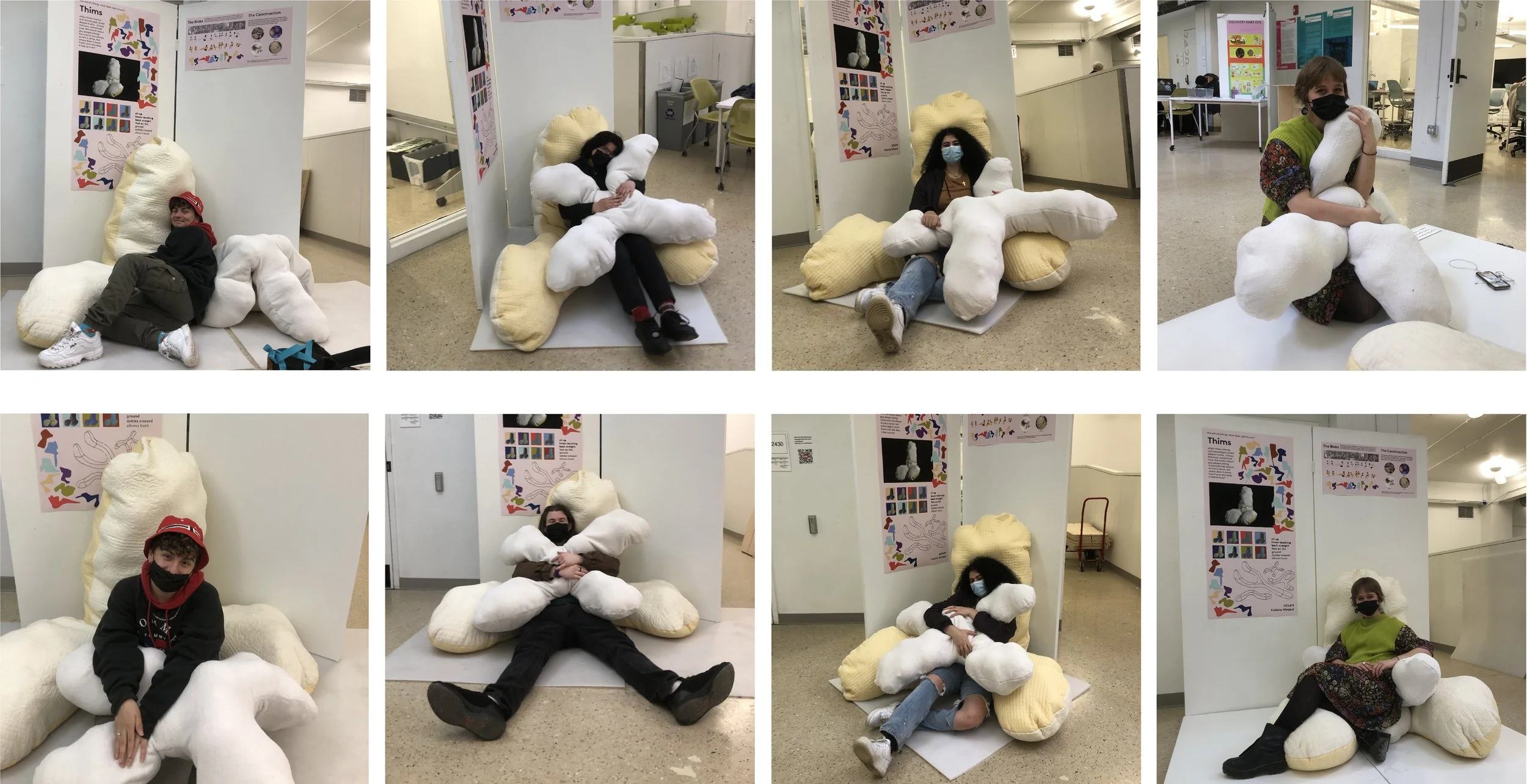
Once completed the seating elements were displayed in a Year End Show and available for public enjoyment. Thims came together and all that was left to do was sit back and enjoy…literally!